For a long time, I was something of a literalist when it came to justice. I believed that if someone did something wrong, they deserved to be punished. Jail time, probation, even execution—I accepted these as necessary consequences of wrongdoing. I believed in our justice system. I believed it was, at its core, a good and honest institution designed to balance the scales between right and wrong, to protect society, and to hold people accountable for the harm they caused.
How wrong I was.
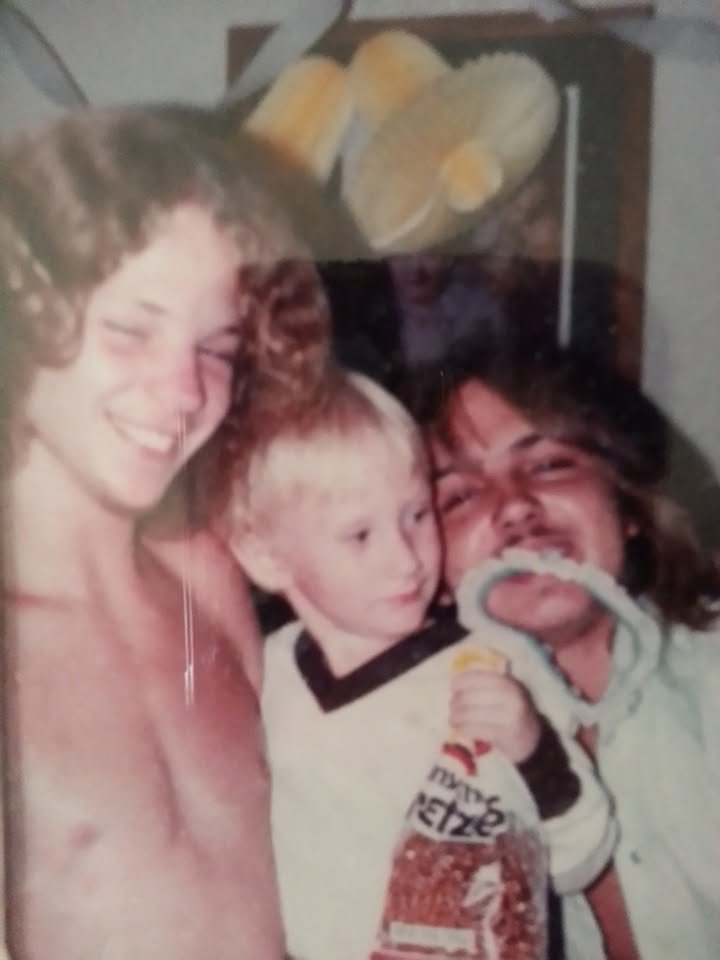
It was not some great philosophical awakening or theological revelation that began to change my mind. It was something much closer to home. It was my uncle.
My uncle’s relationship with the prison system began when he was just thirteen years old and continued, intermittently, until his final incarceration in his late forties. He also lived with significant mental illness, something that complicated nearly every aspect of his life. He heard voices, saw things that were not there, and experienced periods of profound depression. Sometimes his suffering manifested as anger, and sometimes that anger became violence directed toward those closest to him.
One of those people was a woman I knew only as Aunt Robyn, his former girlfriend. He physically assaulted her twice, and, if memory serves, went to jail after the second incident. She refused to take him back, understandably so. What followed was another downward spiral, fueled by depression, alcohol, and goodness knows what else. Eventually, he became involved in a fight at a party that resulted in someone’s death and a manslaughter conviction.
I do not remember the precise chronology of every incarceration, but I believe that was his longest sentence. He spent time in prisons throughout California, including Folsom, and was eventually transferred to Atascadero State Hospital.
When he emerged from those institutions, he was a very different man.
But before I tell you about the man he became, I need you to understand the man I knew. The man who came to the hospital as I was being born and named me John Micheal when my mother was at a loss.
My uncle was an extraordinary artist.
I wish I could show you his work because I do not believe I would be exaggerating to compare some of his drawings of angels to the work of Michelangelo. There was that level of reverence, detail, and beauty in them. He gravitated toward the fantastical: angels, demons, dragons, elves, and all manner of mythical creatures. Some of his drawings were wonderfully outlandish, the sort of imagery you might expect to find on the cover of a heavy metal album, which was very much his musical muse. Others possessed such tenderness and sacred beauty that you could easily imagine them painted as frescoes on the walls of a cathedral.
He was also a self-taught musician.
I remember his absolute delight when he learned that I was going to study the viola and cello. He taught me how to play “Stairway to Heaven” on the cello, and together we created a beautiful duet between his electric guitar and my strings.
We taught each other music. He drilled the treble clef into my head, and I delighted in teaching him bass clef. We both laughed at the peculiarities of the viola’s alto clef.
When I entered high school, he went out and found me an alto saxophone because he knew I could not afford an instrument of my own. I had actually wanted to learn the French horn, but he had found me a saxophone, and I was so honored by that gesture that the saxophone it was.
That was my uncle.
An artist. A musician. A person who recognized creativity in his nephew and wanted to nurture it. Someone who, despite the difficulties of his own life, found joy in helping me discover something beautiful.
As I grew older, my own artistic interests shifted. I stopped drawing regularly in middle school, and while I continued to flirt with music, my passions became theatre and dance.
Somewhere along the way, my uncle returned to prison after stealing a prescription pad from a doctor’s office. This was his final strike, and when he eventually came home, something in him had profoundly changed.
The light was gone.
The creativity was gone.
In many ways, the uncle I remembered was gone.
He returned with additional neo-Nazi tattoos and a much deeper indoctrination into white supremacist ideology. When he learned that I had moved away from music as my primary artistic pursuit and was dating an Afro-Cuban girl, I experienced his anger directed toward me in a way I never had before. It was also the first time he openly expressed homophobic sentiments toward me.
Something inside me snapped.
I withdrew from our relationship entirely. He became one of those relatives whose name was spoken in whispers, someone whose behavior brought shame, hurt, and discomfort to the family.
And I want to be clear about something: the harm he caused was real. The violence against his partners was real. His racism and homophobia were real. His mental illness did not excuse those things, nor did his experiences in prison absolve him of responsibility for his actions.
But neither did those actions erase his humanity.
That distinction took me a long time to understand.
I could spend hours talking about the ways our justice system failed my uncle. About how a person who desperately needed sustained mental health care was instead repeatedly placed into an institution that seemed to exacerbate his suffering. About how he fell through the cracks of an overwhelmed and underfunded system that struggled to provide anything resembling meaningful rehabilitation.
I could tell you about the night he ran through our home carrying a lighter and a can of ether, desperately trying to burn the demons he believed were hiding in the locks of our doors. He was convinced that the neighbors were taunting him and that they all had 666 tattooed on their foreheads. It was terrifying, and it ultimately became one of the reasons he could no longer safely live with us.
He needed help. We needed to be safe. Both of those truths existed simultaneously.
And yet, what he received throughout much of his life was punishment, incarceration, and an institutional identity that increasingly defined him not as a person in need of care and accountability, but simply as a criminal.
The artist disappeared beneath that label. The musician disappeared. The uncle who had found me a saxophone disappeared.
In their place was a man who had spent so much of his life institutionalized that he no longer seemed to know how to exist outside those walls.
After his final incarceration, he settled into a sort of half-life in my great-grandmother’s house, after the rest of our family had moved away. He survived on Social Security and occasional odd jobs and became increasingly reclusive. A succession of deeply troubled relationships came and went, often with women who were carrying wounds and addictions of their own.
And then, one Christmas Eve, something unexpected happened.
We were gathered at my grandmother’s house when my uncle and I found ourselves having a conversation. I cannot remember exactly how it began, but I remember what he said.
He apologized.
He told me that he knew he had damaged our relationship. He said how happy he was that I had held on to my creativity, and how much he missed me as his nephew.
For the first time in years, I felt as though I was speaking to the uncle I had once known.
We talked about his experiences in prison, particularly his time in the Security Housing Unit, or SHU—the place commonly called the hole. Solitary confinement had profoundly affected him. He described how the isolation intensified the symptoms of what was eventually diagnosed as schizophrenia, how the voices and hallucinations became even more overwhelming when he was locked away from human contact.
And then he told me something that has stayed with me ever since.
He missed prison.
Not because he enjoyed incarceration, but because prison had become the only place where he understood how to live. There, he had a community. He had friends. There were rules, routines, and expectations he understood. He knew where he belonged.
Outside those walls, he was lost.
He admitted that he did not know how to be a person in the world anymore. He did not know how to interact with people, how to build healthy relationships, or how to construct a meaningful life for himself. He knew his current relationship was unhealthy, but, as he put it, she was a warm body who cared for him in her own way.
I have thought about that conversation so many times.
What does it say about a system supposedly designed to rehabilitate human beings when someone emerges from it believing that they no longer know how to be human?
What does it say about us when the only place someone feels a sense of belonging is the very institution that has stripped away so much of their personhood?
Four or five months later, my uncle died.
He was found in his recliner, in the living room of that same house. He had suffered a heart attack. Years of substance abuse, poor nutrition, and a life marked by profound instability had taken their toll. His girlfriend, believing he was simply sleeping, had left him there for much of the day. When she realized he had died, she was frightened that she would somehow be blamed.
And so his life ended.
I mourned him.
Not because I had forgotten the racist ideology, the violence, the addiction, or the pain he had caused. I mourned him because beneath all those things was a human being I had loved. I mourned the extraordinarily gifted artist whose angels looked as though they belonged in a cathedral. I mourned the musician who taught me Led Zeppelin on the cello. I mourned the uncle who found a saxophone for a nephew who could not afford one.
I mourned the person he had been, and the person he might have become had his life unfolded differently.
And somewhere in that grief, my understanding of justice changed.
I began to recognize that our prison system, despite its stated aspirations, is overwhelmingly punitive in its orientation. Rehabilitation may exist within it, and there are certainly individuals working tirelessly to make a difference, but too often the institution itself seems far more invested in punishment than in restoration.
My uncle actually trained to become a firefighter and a welder while incarcerated. He learned skills that could have provided him with meaningful work, stability, and perhaps even a renewed sense of purpose.
But when he was released, nobody wanted to hire him.
We offered him training and then denied him opportunities to use it. We demanded that he reintegrate into society while constructing barriers that made reintegration extraordinarily difficult.
And we called that justice.
My uncle was a white man. I cannot help but think that if this system could so thoroughly fail someone who possessed that particular social advantage, how much more devastating its consequences must be for those who also face systemic racism, economic marginalization, disability discrimination, and the countless other inequities woven into our institutions.
It became impossible for me to ignore that our justice system does not treat everyone equally, and that the consequences of its failures fall disproportionately upon people who are already vulnerable.
Which brings me to something that has been weighing heavily on my spirit.
When I heard discussion of our nation’s leaders televising the execution of the Army psychiatrist responsible for the 2009 Fort Hood shooting—the murder of thirteen people and the wounding of dozens more—I found myself profoundly disturbed.
Not because I believe his actions should go unanswered.
They were horrific.
Thirteen people lost their lives. Others were wounded. Families were shattered. Survivors were left carrying wounds, both visible and invisible, that no judicial proceeding can simply erase. Their suffering deserves recognition, their stories deserve to be heard, and their loss deserves far more than a passing acknowledgment in a national debate about capital punishment.
But I cannot look at the prospect of a public execution and see justice.
I see vengeance.
I see a society that has become so comfortable with violence as a response to violence that we are willing to turn the taking of another human life into a public spectacle.
And I find the imagery particularly troubling: a man of Middle Eastern descent, now living with paralysis and using a wheelchair, facing death at the hands of the state. There are layers of race, religion, disability, nationalism, and institutional power embedded in that image that we ought to be willing to confront.
I am not suggesting that his identity diminishes his culpability. Nor am I suggesting that we should assume mental illness explains his crime simply because he was a military psychiatrist.
What I am asking is whether our understanding of justice has become so narrow that we no longer feel compelled to ask the deeper questions.
How did this happen? What ideological, institutional, social, and personal factors contributed to such an atrocity? What warning signs were missed? What could have been done differently? What have we learned that might prevent something like this from happening again?
And perhaps most importantly, how does executing another human being bring us any closer to answering those questions?
My uncle’s story taught me something that I wish I had understood much earlier in life: understanding the circumstances that contribute to someone’s actions is not the same as excusing those actions.
We can insist upon accountability while still recognizing the inherent worth and dignity of a person who has committed terrible harm.
We can protect victims and survivors without abandoning our commitment to the humanity of those who have harmed them.
We can acknowledge that some people must be separated from society for the protection of others without accepting that incarceration should necessarily mean degradation, cruelty, or the destruction of the human spirit.
And we can demand justice without demanding blood.
As a Unitarian Universalist minister, I understand love not simply as an emotion, but as a moral commitment. Love asks something difficult of us. It asks us to recognize our interconnectedness even when doing so makes us uncomfortable. It asks us to hold accountability and compassion together rather than treating them as opposing forces. It asks us to confront systems that diminish human dignity, including when those systems operate in our name and claim to be acting on our behalf.
Love does not mean that there are no consequences.
Love does not mean that we turn away from victims or minimize the suffering caused by violence.
And love certainly does not mean that we are obligated to reconcile with those who have harmed us. I had to distance myself from my uncle because his behavior was harmful, and doing so was necessary.
But love does insist that we resist the temptation to reduce another human being to the worst thing they have ever done.
For much of my life, I believed capital punishment was justified. I believed that an eye for an eye represented a kind of moral equilibrium, that somehow the scales would be balanced if those who took life had their own lives taken in return.
But the more I witnessed injustice, the more I learned about the disparate treatment of people of color, disabled people, and those who are mentally, financially, and socially vulnerable, the less I could reconcile that belief with my understanding of human dignity.
What are we actually solving through this commitment to retribution?
Are we creating safer communities? Are we addressing the conditions that contribute to violence? Are we reducing harm, repairing what can be repaired, and ensuring that fewer families will have to experience the devastation of losing someone they love?
Or are we simply perpetuating the same violence under the comforting illusion that, because it has been sanctioned by the state, it has somehow become morally righteous?
I think back to my uncle, sitting across from me that Christmas Eve, telling me how much he missed me. I think about the man who once drew angels with extraordinary tenderness and who, after decades of incarceration, confessed that he no longer knew how to live outside a prison.
I wonder what might have been possible had someone, somewhere along the way, seen more in him than a criminal. Had accountability been accompanied by meaningful treatment. Had rehabilitation meant something more than a vocational certificate that no employer would honor. Had he been offered a genuine opportunity to become something other than the sum of his convictions.
I cannot know whether his life would have turned out differently. I cannot pretend that love alone would have healed him, nor that every person who causes harm will choose to change when offered the opportunity.
But I do know that we cannot claim to value human dignity while constructing systems that systematically strip it away.
And I cannot reconcile a theology centered on love with a public morality that celebrates the deliberate taking of human life as an accomplishment.
Justice should be more than the satisfaction of seeing someone punished.
It should be about protecting the vulnerable, acknowledging harm, seeking truth, fostering accountability, and creating the conditions in which healing and transformation might actually become possible.
It should ask not only what someone deserves for the harm they have caused, but also what we, as a society, are responsible for doing to ensure that such harm is less likely to happen again.
Because ultimately, the question before us is not whether those who commit terrible acts should be held accountable. Of course they should.
The question is what kind of people we become in the process of holding them accountable.
What does our response to violence reveal about our own moral character?
What does it say about our understanding of justice, our commitment to human dignity, and the values we claim to hold sacred?
I am deeply relieved that the proposed execution will not be televised. But I am equally saddened that turning the taking of a human life into a public spectacle was ever considered in the first place. That we could even entertain such a possibility ought to give us pause—not simply as citizens, but as moral beings who claim to value justice, compassion, and the inherent dignity of every human life.
Choosing not to televise an execution may spare us the spectacle, but it does not absolve us of the deeper moral question. We must still wrestle with what it means for a society to deliberately take a life in the name of justice, and whether doing so brings us any closer to healing the wounds that violence leaves behind.
I wonder, when future generations look back upon the choices we made, will they recognize a people who sought to interrupt the cycle of violence, or a people who merely learned to institutionalize it? Will they see a society that struggled, however imperfectly, toward compassion and restoration, or one that mistook vengeance for accountability and punishment for justice?
Are we a people of love, or are we a people of vengeance?
And if we claim to be a people of love, then perhaps the most important question is not what we believe, but what we are willing to do to make that love visible in the way we practice justice.
Leave a Reply