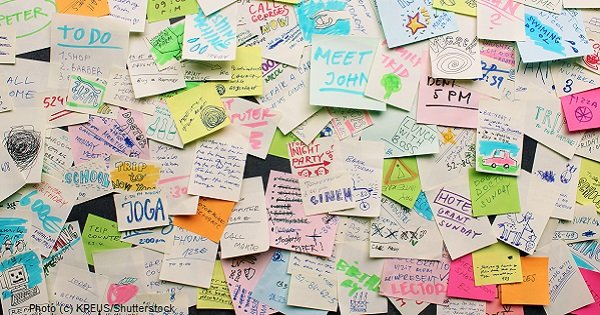
I over-scheduled myself again.
I can already feel my husband’s side-eye, but I promise I didn’t do it on purpose. It was a genuine mistake. Something important came up, and I wanted to make sure that the person affected had one less thing to worry about. So, naturally, I said I would take care of it.
The problem? I was already taking care of something else because I had promised another group that I would be there for them.
See what I mean?
Yes, it’s confusing, but I know it happens to the best of us. We have calendars, apps, and reminders, and yet, even with the best of intentions, things get scheduled on top of one another or, even worse, forgotten altogether. Apparently, technology is only as effective as the human being using it.
I am a busy person. I am a minister serving my new congregation full-time. I work part-time at the hospital two to four times a month, I run a nonprofit historical reenactment group that participates in Renaissance faires, and I am a full-time doctoral student. Not to mention that I am married and have a home and a relationship that both need tending.
Could I give any one of those things up?
Well, I actually did recently. I gave up being a flight attendant to focus on full-time ministry. I suppose one could argue that I didn’t really give anything up so much as I replaced one thing with another.
This is where I also tell you that I have not performed in drag in over a year, save for the once-a-year church performance I am asked to do for Pride Month. I guess you could say I gave that up, albeit inadvertently.
It’s interesting to consider the things we relinquish without ever consciously deciding to do so. Sometimes, they simply disappear from our lives because we have made room for other things. And sometimes, we don’t even notice their absence until we stop long enough to take inventory of our lives.
There are, however, some things I have intentionally changed about the way I live.
I rarely watch television on my own anymore, unless I truly have the time and inclination to do so. I have gotten better (not completely, mind you) at managing my procrastination, for which I can thank modern science and pharmaceuticals.
And while I still have a temper, I no longer explode the way I used to. Well, not nearly as often. There was a time when I would allow anger and frustration to build and build until it all came rushing out at once. I am learning to recognize those feelings before they reach that point and to give myself permission to acknowledge what I am experiencing.
Perhaps one of the most significant changes is that I have learned to let things go when they don’t need my immediate attention.
I can’t read that book right now? It’ll still be there when I have the time.
I couldn’t finish that costume? Then I’ll have it for next year.
I no longer push myself to finish things that can reasonably wait, and that has been immeasurably better for my emotional health. There is a tremendous freedom in recognizing that not everything is urgent simply because it remains unfinished.
I have also stopped allowing perfectionism to rule my life.
If I get a B on an assignment? I’ll do better next time.
If a congregant didn’t particularly care for a sermon or its message? Perhaps another one will resonate more deeply with them.
If a patient asks me to leave their hospital room? That is what I call a “holy no,” and I honor it.
What I find particularly interesting about that last example is how readily I recognize and respect someone else’s right to say no, yet how reluctant I can be to exercise that same right myself.
Why is that?
Why are so many of us willing to extend compassion, understanding, and grace to others, yet struggle to offer those very same things to ourselves?
I wonder how often we confuse our capacity to do something with an obligation to do it. How often do we say yes because we know we can help, without stopping to consider whether we have the emotional, physical, or spiritual resources to do so? And how often do we measure our own worth by how useful we are to other people?
There is nothing inherently wrong with wanting to be of service. Indeed, much of my understanding of ministry is rooted in our responsibility to care for one another. As a Unitarian Universalist, I understand Love to be at the center of our faith, calling us into relationships of compassion, generosity, mutuality, and accountability.
But nowhere in that understanding of Love is there a requirement that we exhaust ourselves in its pursuit.
We, too, are worthy of the care we offer others. We, too, are deserving of compassion. And we, too, are entitled to our own “holy no.”
Sometimes, the most loving thing we can do is acknowledge our limitations before we make promises that we may struggle to keep. Setting boundaries is not an abandonment of our commitments; rather, it is a means by which we can honor those commitments more faithfully. When we recognize our own needs, we are better equipped to be genuinely present to the needs of others.
So, yes, I over-scheduled myself again.
I got it worked out. Nothing was damaged, no one was hurt, and eventually I’ll remember to look at my calendar in the moment rather than two days later while preparing for yet another event.
But perhaps the greater lesson here isn’t about becoming better at managing my calendar. Perhaps it is about becoming better at recognizing my own humanity.
We are imperfect beings, continually learning how to navigate the complexities of our lives. We will occasionally disappoint people. We will make mistakes, forget things, and discover that our best intentions sometimes exceed our capacity. Our responsibility is not to achieve some impossible standard of perfection, but to remain accountable for our actions while allowing ourselves the grace to learn from them.
And perhaps, the next time someone asks something of us, we might take a moment before answering. We might ask ourselves whether our yes is coming from a place of genuine abundance or from a belief that we must somehow earn our worth through what we do for others.
Our worth is inherent. It is not something we earn through productivity, academic achievement, professional success, or the number of people who can depend upon us.
We do not have to earn our place among those deserving of our compassion.
We are already among them.
And that, dear ones, is something worth making room for on our calendars.
Leave a Reply